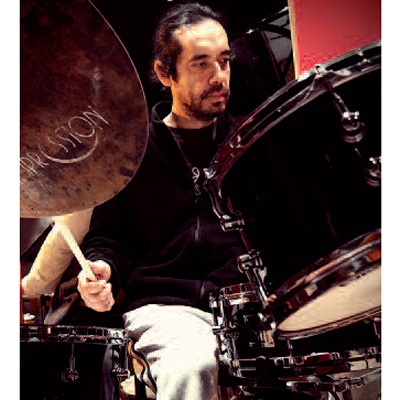
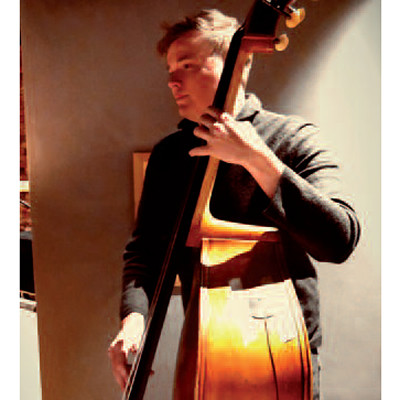
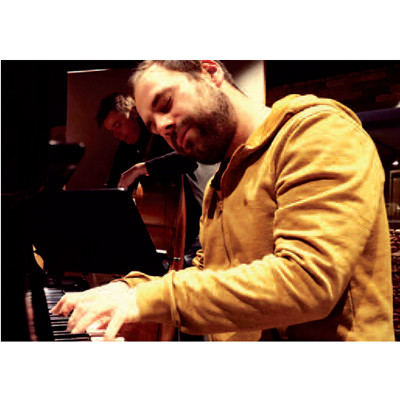
As agreed with Antoine and Viktor (and under the expert eye of Jonathan Marcoz), I wanted to record this album in a context that would be as close as possible as to that of a concert. We played together in the same room and without headphones in order to recreate, to the utmost, the experience of a live performance.
Beyond the extensive work of the trio and its evolution over the past few years, this album is above all the image of a precise moment of music and creation. I therefore thank Viktor and Antoine for their trust, their sensitivity and enthusiasm.
I also do want to express my gratitude to Jonathan for his involvement, his quality of listening and remarkable input at each step of the process. Finally, I want to salute the infallible work and devotion of Jordi Pujol, who once again gave me unconditional trust and artistic freedom. Thank you!
—Etienne Déconfin
Tracklist
01. Fläderblomma (Etienne Déconfin) 10:07
02. Why Not (Etienne Déconfin) 11:32
03. Let Silence Speak (Etienne Déconfin) 4:39
04. Green Light Blues (Etienne Déconfin) 7:49
05. The Drifter (Etienne Déconfin) 7:47
06. Too Late (Etienne Déconfin) 6:24
07. Funny Game (Etienne Déconfin) 5:35
08. The Magician in You (Etienne Déconfin) 9:03
Press reviews
Nouveauté ★★★★
"Originaire de Bourges, Étienne Déconfin a longuement collaboré avec le contrebassiste Géraud Portai mais aussi avec le saxophoniste Gaël Horellou. C’est dans le quintette de ce dernier avec Jérémy Pelt que s’est renforcée sa complicité avec Viktor Nyberg et Antoine Paganotti, concrétisée ici par un deuxième disque sur le label de Jordi Pujol après “Wanted” (2024). Le répertoire est entièrement original et consistant, trois pièces sur les huit approchant ou dépassant les dix minutes. Dès l’introduction de Fläderblomma souffle le vent d’un art of the trio dont les modèles, bien qu’identifiables, se placent rapidement au second plan, tant s’affirme d’emblée une forte identité de groupe. En témoignent - la recherche de ruptures de ton (telle l’improvisation suspendue après l’épisode de batterie solo dans Why Not}, l’appropriation toute personnelle des conventions de la ballade (Let Silence Speak), des compositions réjouissantes (Funny Game), sans oublier un drumming alerte et ciselé qui propulse l’ensemble en le maintenant toujours lisible. En clôture s’improvise collectivement un vaste paysage sonore traversé comme en apesanteur. Soutenue par les longues tenues arco, une paisible mélodie en accords progresse parmi les striures de la percussion, avant d’exploser en flammèches jusqu’au recueillement du cantando final."
—Vincent Cotro (Février, 2026)
Jazz Magazine