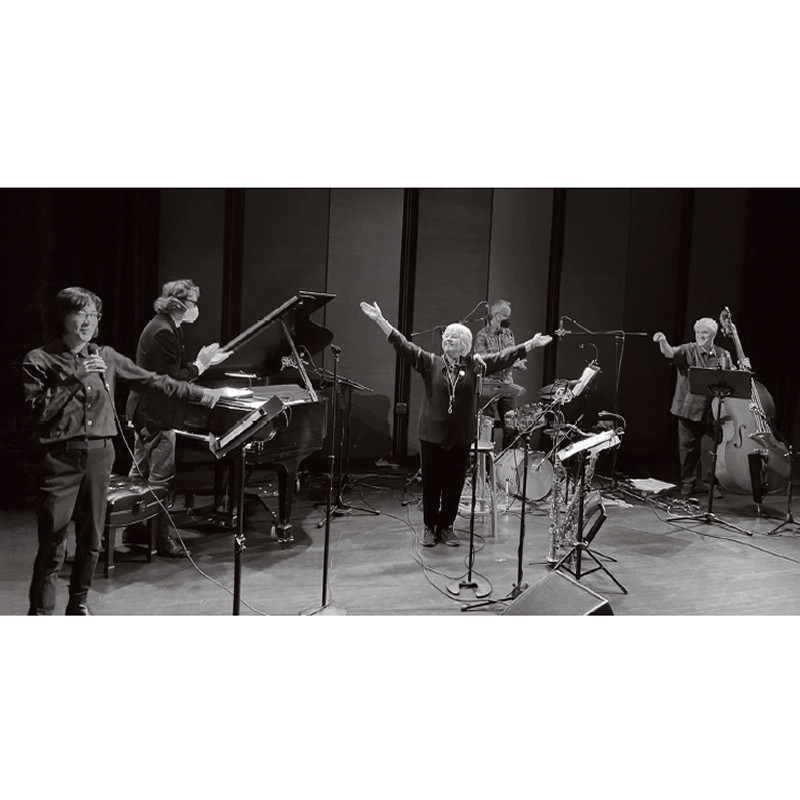
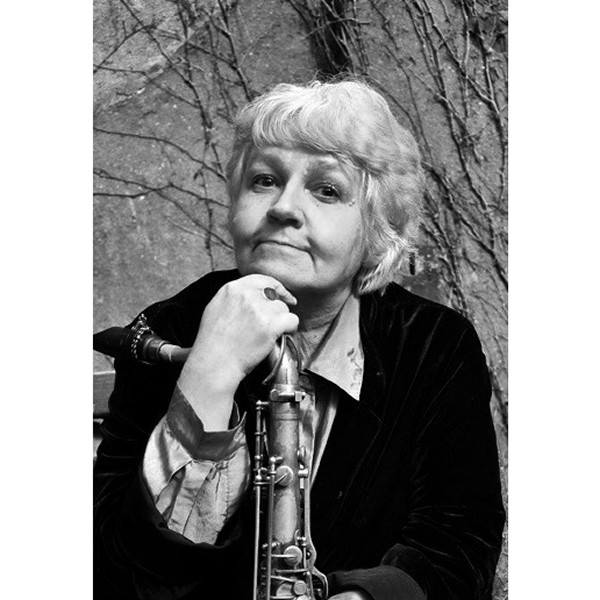
It is difficult to put great poems to music, because poetry is already music. So this suite is not quite “music to Tsvetaeva’s poems,” but rather an act of our collective perception of her poetry. An attempt at intuitive understanding. And the most interesting thing is how our feelings and our perception intertwine in the process of collective music-making, while we, five human personalities, create this work. Therefore, my translations of Marina Tsvetaeva's poems are not literal, but rather modes of my perception, facets of Tsvetaeva’s imagery and meaning. One shouldn’t expect our music to “ accompany” a poetic text, it’s primarily music and most importantly, improvisational music. It’s similar to how an actress would play the part of Tsvetaeva in a “biopic” film, if such a film existed. But in the case of our suite, the actors are we all, as an ensemble. And there are six short “films”, each piece is a new story and a new “director’s cut”, where every ensemble member assumes a role of a “director” at different musical moments, taking lead for a while and then passing it along.
—Lena Bloch
Tracklist
01. I Refuse 8:26 02. Insomnia 7:33 03. Marina 7:44 04. Such Tenderness 8:27 05. Tired 8:13 06. Immeasurable 9:30 07. The Time Will Come 5:37
Album details
All compositions by Lena Bloch Publishing, BMI Poems by Marina Tsvetaeva, english translations by Lena Bloch
Personnel: Lena Bloch (tenor & soprano saxophones), Kyoko Kitamura (vocals), Jacob Sacks (piano), Ken Filiano (bass), Michael Sarin (drums). Recorded at The Bunker Studio, Brooklyn, New York, November 3, 2022
Engineered by Jon Rosenberg, Alex Conroy Mixed and mastered by Jon Rosenberg, Brooklyn, NY Photographs by Randy Thaler Ink paintings of Marina Tsvetaeva by Irina Dmitrenko Graphic design by Christopher Drukker
Produced by Lena Bloch & Jon Rosenberg Executive Producer: Jordi Pujol
"Marina Ivanovna Tsvetaeva (1892-1941), who had a rather episodic and often-tumultuous life, was a major Russian poet. Her poetry is the inspiration for the seven performances on Marina by tenor and soprano saxophonist Lena Bloch (who translated the poetry), pianist Jacob Sacks, bassist Ken Filiano, drummer Michael Sarin, and vocalist Kyoko Kitamura.
Kitamura displays a remarkable range on the opening “I Refuse” and is featured singing and/or reciting poetry on each of the selections; the words actually matter less in this setting than her emotional intensity. The music, which features many solos by Bloch (whose recordings are always well worth hearing) and Sacks, is adventurous, moody, sometimes stormy, frequently dramatic, and often melancholy. While “I Refuse” is the most extroverted of the pieces, other highlights include the calm if mildly unsettling waltz “Insomnia,” the loose bass and drum patterns on “Marina,” and the haunting “Such Tenderness.”
The result is a thought-provoking and rather moody tribute to the poet."
—Scott Yanow (January, 2026) Los Angeles Jazz Scene